
Understanding Surgical Instrument Product Codes, Sizes and Specifications
How to read a product name, product code and size on a surgical-instrument catalogue page, with a worked example, so your enquiry names exactly the instrument you need.
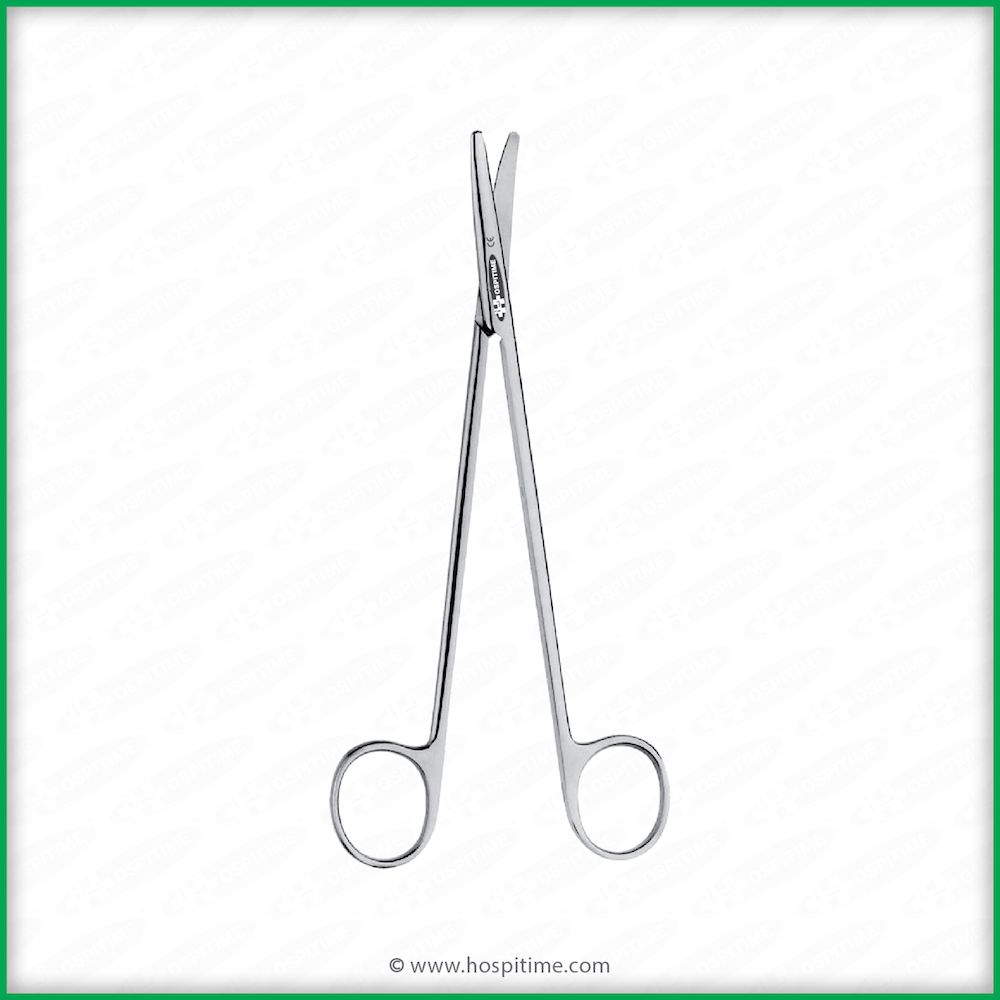
Instrument names alone rarely identify a single item. A catalogue can list many scissors, forceps and needle holders whose names differ only by a length or a variant. Product codes, sizes and specifications are what turn a general name into one exact instrument. This article shows how to read them, using real entries from the Hospitime catalogue.
Why the product code matters
A product code identifies one specific item. On a Hospitime product page it appears as the SKU, next to the product’s categories. When you quote that code in an enquiry, the supplier can see exactly which instrument you mean, even if several products share a similar name.
Reading a product name
Most instrument names follow the same logic: pattern, then length, then variant. For example, “Metzenbaum Scissors 17.5 cm Curved” tells you:
- Pattern: Metzenbaum scissors.
- Length: 17.5 cm.
- Variant: curved (the alternative is straight).
Each combination is its own product with its own code, as the table below shows.
Worked example: Metzenbaum scissors
| Product name | Length | Variant | Product code (SKU) |
|---|---|---|---|
| Metzenbaum Scissors 15 cm Straight | 15 cm | Straight | 1065 |
| Metzenbaum Scissors 15 cm Curved | 15 cm | Curved | 1066 |
| Metzenbaum Scissors 17.5 cm Straight | 17.5 cm | Straight | 1067 |
| Metzenbaum Scissors 17.5 cm Curved | 17.5 cm | Curved | 1068 |
| Metzenbaum Scissors 20 cm Straight | 20 cm | Straight | 1069 |
| Metzenbaum Scissors 20 cm Curved | 20 cm | Curved | 1070 |
| Metzenbaum Scissors 22.5 cm Straight | 22.5 cm | Straight | 1071 |
| Metzenbaum Scissors 22.5 cm Curved | 22.5 cm | Curved | 1072 |
Codes are those shown on the Hospitime product pages when this article was prepared. Always confirm the code on the live product page before you enquire.
Sizes and units
Hospitime product names state the length in centimetres. Some buyers work in inches or in the length used by their own purchasing system, so convert before you compare products from different sources. The instrument measurement conversions page can help. Also check what the length refers to: the overall length of the instrument is the figure normally given, and working-end dimensions, where they matter, are better confirmed on the datasheet.
Beyond the name: the full specification
Two instruments with the same name and length can still differ in details. When a specification matters to you, check these on the product page or datasheet:
- the material and surface finish;
- the working end, such as the tip shape or jaw pattern;
- any inserts, for example tungsten carbide;
- the variant, such as straight or curved;
- the datasheet, which each product page offers as a PDF download.
Codes belong to each manufacturer
A product code is specific to the catalogue it comes from. The same instrument can carry a different code at another manufacturer, so a Hospitime code does not translate directly into another supplier’s code, and the reverse is also true. If you are working from another supplier’s list, describe the instrument by name, length and variant as well, and let the supplier match it to their own catalogue.
Using this in an enquiry
For each item, give the full product name, the length and variant, the product code and the quantity. A line such as “Metzenbaum Scissors 17.5 cm Curved, code 1068, 10 pieces” leaves little room for error and speeds up the reply. See the Surgical Instrument Buying Guide for a step-by-step approach to selecting and enquiring.
Looking for a specific instrument?
Browse the Hospitime catalogue, or send us an enquiry with the instruments and quantities you need.
More from Hospitime Stories
This article provides general information to help you understand and compare surgical instruments. It is not clinical guidance. Product specifications and the applicable manufacturer instructions should always take precedence, and cleaning or sterilisation of instruments should follow the product instructions and your healthcare facility’s validated procedures.