
Straight vs Curved Surgical Scissors: Understanding the Differences
How straight and curved blades differ, and what else to check, such as pattern, length, tip and material, before you request a quotation.
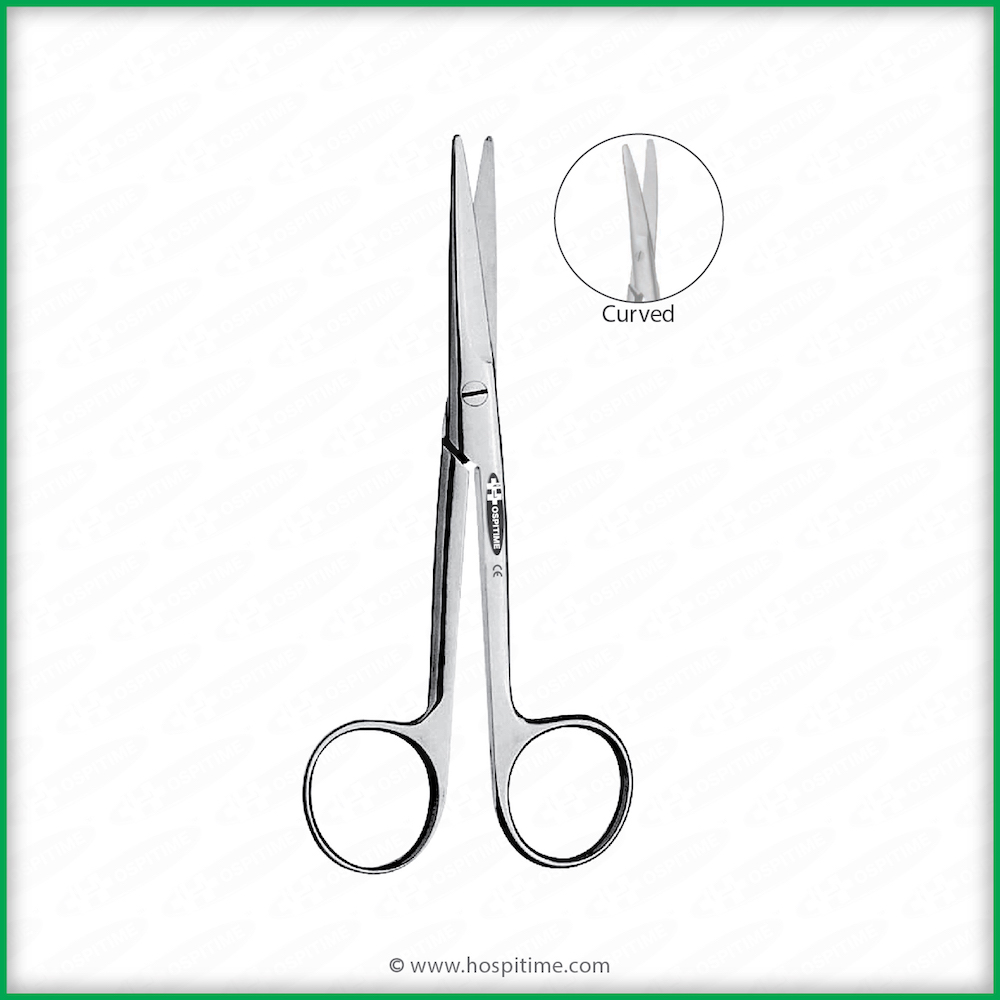
Open any surgical-instrument catalogue and the same scissors pattern often appears twice: once straight and once curved. The difference looks simple, but it affects how the instrument is held, how the blades meet the work, and what a buyer needs to state in an enquiry. This article explains what the two descriptions mean and what else to check before you order.
What “straight” and “curved” describe
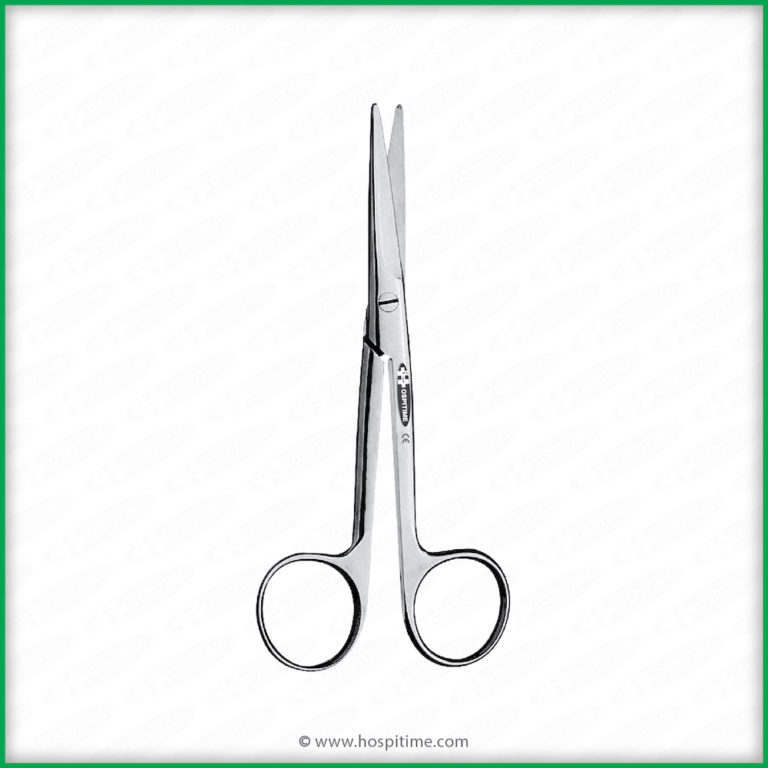
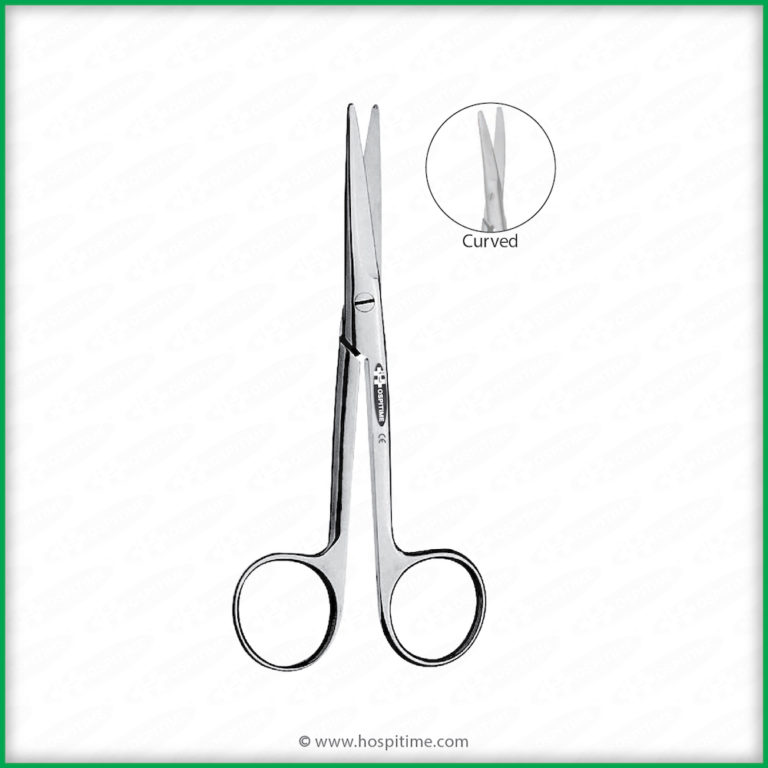
In straight scissors the blades continue in the same line as the shanks and handles. In curved scissors the blades curve to one side along their length, so the tips angle away from the line of the handles. The curve is part of the blade pattern rather than a separate feature, which is why catalogues list “Straight” and “Curved” as variants of the same named pattern.
Why the difference matters
Because the blades are shaped differently, the two variants are held and used differently:
- Straight scissors cut along a direct line from the hand. This is convenient when the blade tips are easy to see, for example when cutting sutures or dressing material.
- Curved scissors let the user angle the blades away from the line of the hand. Many users find this helps keep the tips visible and follow the contour of the work, which is one reason curved patterns are widely used for dissection.
Which variant a surgical team prefers depends on the procedure, the tissue involved and the individual surgeon’s technique. This article explains catalogue descriptions; it is not clinical guidance on instrument choice.
Straight and curved at a glance
| Feature | Straight | Curved |
|---|---|---|
| Blade line | In line with the shanks and handles | Curves to one side along the blade |
| Direction of the tips | Along the line of the hand | Angled away from the line of the hand |
| Catalogue wording | “Straight” | “Curved” |
| In the Hospitime catalogue | Mayo, Metzenbaum and fine iris scissors are each listed in both a straight and a curved version. | |
Straight or curved is only one part of the specification
Two scissors can both be “curved” and still be very different instruments. Before you enquire, check the rest of the description:
- Pattern name. Mayo, Metzenbaum and fine iris scissors are different patterns with different blade proportions and typical uses.
- Length. Metzenbaum scissors in the Hospitime catalogue are listed in four lengths, from 15 cm to 22.5 cm, and each length is a separate product.
- Tip combination. Scissors are made with sharp or blunt tips on each blade: sharp/sharp, sharp/blunt or blunt/blunt. Catalogues often abbreviate this, for example SXS, SXB and BXB.
- Material and finish. Stainless steel is the usual material. Some scissors have tungsten-carbide inserts in the blades; these are often marked by gold-coloured handle rings, but always confirm on the product page or datasheet.
A worked example
The Hospitime catalogue lists Metzenbaum scissors as a straight and a curved product in each length. Metzenbaum Scissors 15 cm Straight and Metzenbaum Scissors 15 cm Curved, for instance, are two separate products with separate product codes. An enquiry that says only “Metzenbaum scissors, 15 cm” does not tell the supplier which one is needed. Naming the variant and quoting the product code removes the doubt.
What to state when you enquire
- The pattern name, and whether you need straight or curved.
- The length.
- The tip combination, where the product offers a choice.
- The product code exactly as shown on the product page.
- The quantity.
Each product page also offers a datasheet download, which is the best place to confirm dimensions and material before you order.
Looking for a specific instrument?
Browse the Hospitime catalogue, or send us an enquiry with the instruments and quantities you need.
More from Hospitime Stories
This article provides general information to help you understand and compare surgical instruments. It is not clinical guidance. Product specifications and the applicable manufacturer instructions should always take precedence, and cleaning or sterilisation of instruments should follow the product instructions and your healthcare facility’s validated procedures.